

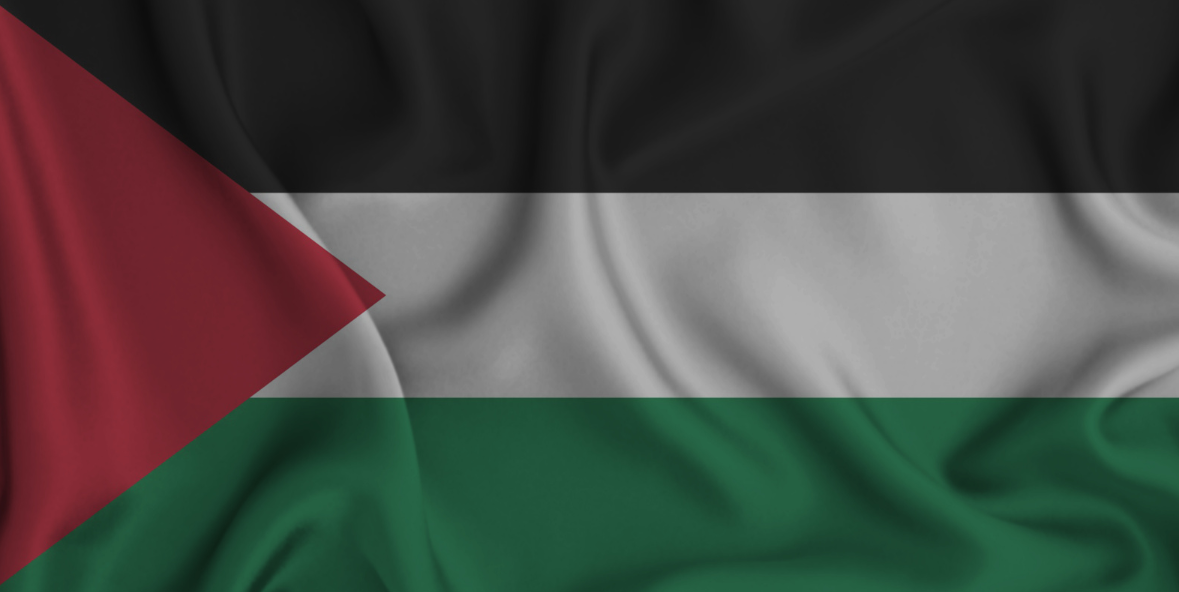
Enabled by negotiators from Egypt, Qatar and Türkiye, President Trump has claimed an historic breakthrough in persuading Hamas to disarm and Israel to withdraw at least beyond a yellow line which divides Gaza.
The UN Secretary General and the President of the European Commission have congratulated negotiators and welcomed the prospect of peace. They sound positive but the vehicle they appear happy about looks as though it may break down and not travel far.
Palestinians’ and Israeli judgements about priorities for peace show vast differences.
Interviewed by the BBC and Aljazeera, a student living in a tent in southern Gaza said that the peace plan paid no attention to her living conditions. ‘In a tent it is so hot. It is dangerous but there’s nowhere else to live.’
A single mother with three children had found shelter within the walls of a bombed building. Asked if she was pleased that Hamas had been disarmed and that gunmen no longer walked the streets, she responded, ‘I have never seen men with guns in these streets. I only see people carrying their sorrow and their water containers.’
A neuro-surgeon in Gaza City hoped that peace would bring medical resources.’I have no scanner, few antibiotics. My hands are tied. Peace to be real would have to bring medical supplies.’
Israeli citizens’ perspectives on peace showed anger towards Palestinians in general and to Hamas in particular. Interviewed in Jerusalem, a middle aged Israeli woman fumed, ‘You can’t trust those Hamas savages. You have to stop them murdering us. There must be no repeat of October 2023.’
A second female interviewee said, ‘The Palestinians can’t be trusted.’ She made no mention of Israeli destruction and killings, no reference to Israel’s broken promises. The conflict was between worthy people, the Israelis, and unworthy enemies, the Palestinians.
Hostility amounting to homicidal attitudes towards Palestinians appeared in CNN journalist Christiane Amanpour’s interview with Israeli Haaretz reporter Nir Hassan. In response to his article about the desperate state of Gaza’s children, he had expected sympathy. ‘On the contrary I experienced loathing, laughter and messages saying. ‘All those children should be killed. None should be left, otherwise they will grow up to be terrorists.’
A mismatch operates in the contrast between a militaristic, technocratic fix for peace versus Gazans’ appeals for some revival of humanity as in immediate relief of their suffering.
Backed by the Board of Peace, a 20,000 strong International Stabilization Force will enter Gaza, be supported by 12,000 newly trained police, each force to aid a proposed Palestinian government of apolitical technocrats, but this reference to a government of technocrats is the only place where Palestinians are included in Peace Board plans.
These plans do not foreshadow a Palestinian state.
The difference between Gazans’ immediate need and peace planner’s goals is underlined by survival-only conditions experienced by over two million Gazans. There is a mismatch between Trump’s proud ‘breakthrough’ and an ongoing humanitarian disaster.
Since the ceasefire of October 2025, over 1,200 Palestinians have been killed and 4,000 injured. Bodies lie in the streets, garbage is piled high, rats and dogs run amok, children are bitten in their sleep, much of the population is displaced, electricity does not exist, water supply, sewage infrastructure, schools and hospitals lie in ruins.
Ending control of Gazans by a hostile military seems unlikely. Prime Minister Netanyahu has directed his military to seize control of 70% of Gaza and boasts it could take even more.
A major problem affecting prospects for peace lies between Hamas and Israeli leadership.
Hamas spokespersons insist that Israel ceases bombing, ends targeted killings, withdraws troops and allows a surge of humanitarian aid consistent with the terms of the October 2025 ceasefire.
Hamas representative Gazi Hamad says, ‘We will not begin any weapons related steps until Israel implements these commitments. If Israel does not implement them, we will not proceed.’
Hamas refers to the eventual establishment of a Palestinian state, a goal not announced by Trump and which Israel rejects.
Prime Minister Netanyahu has not responded to the Trump plan but right-wing members of his government have rejected the President’s proposals. That government had already insisted on the complete disarmament of Hamas and no Israeli withdrawal until de-militarization in Gaza was complete.
An impasses passes for communication between Hamas and Israel. Trump is confident, Netanyahu silent, Palestinians disbelieving.
Israeli commentators predict that Netanyahu cannot afford to withdraw troops during an election campaign in which judgment of his character is the key issue. Israeli media show little or no interest in proposals for peace.
In search for dialogue and associated fostering of trust, another mismatch looms. The international community, which includes the Australian government, claims to respect international law and human rights but appears neutral, even disinterested in ways to end inhumanities in Palestine.
To fill that void, 600 former Israeli military, intelligence and diplomatic leaders have written to President Trump urging him to pressure Netanyahu to curb settler terror in the occupied West Bank.
These Israeli self named ‘Commanders for Israel’s Security’ have given the international community a cue as to their moral responsibilities and how they might act.
Implementing plans to achieve any peace with justice requires reciprocity between parties, beginnings of mutual respect and thereby a building of trust which is demonstrated, proven and repeated.
Yet in the Trump peace plan, the mismatch between Gazans’ immediate humanitarian needs and the technical steps of the peace plan makes it difficult to achieve trust.
Simultaneously Hamas insists they will not disarm until Israel withdraws, an ultimatum which clashes with Israel’s refusal to withdraw until an armed Hamas no longer exists.
Somewhen, somehow, the trust issue has to be made explicit and addressed. But there’s another sleeper in all this.
Can President Trump be trusted?
Section: Opinion and Analysis. Online First Preprint. View the PDF of this article on the Global Change Open Journal Systems page: https://globalsecurityfoundation.com/journals/index.php/globalchange/index .
Copyright: Open Access – This article is licensed under a Creative Commons: CC BY-NC 4.0 Attribution Non-Commercial license. You are free to copy and redistribute the material in any medium or format providing attribution is given to Global Change and the material is not used for commercial purposes.
Peer Review: This article is a non-peer reviewed opinion and analysis manuscript accepted after editorial review.
Published 4 August 2026.
Author: Stuart Rees and Global Change
Global Change is a double-blind peer reviewed academic journal established in 1989. For more information, visit our Open Journal Systems page here: https://globalsecurityfoundation.com/journals/index.php/globalchange.
Stuart Rees
Stuart Rees AM is Professor Emeritus at the University of Sydney.

Global Change is a double-blind peer reviewed academic journal
established in 1989. For more information, visit our Open Journal Systems page here: https://globalsecurityfoundation.com/journals/index.php/globalchange.